
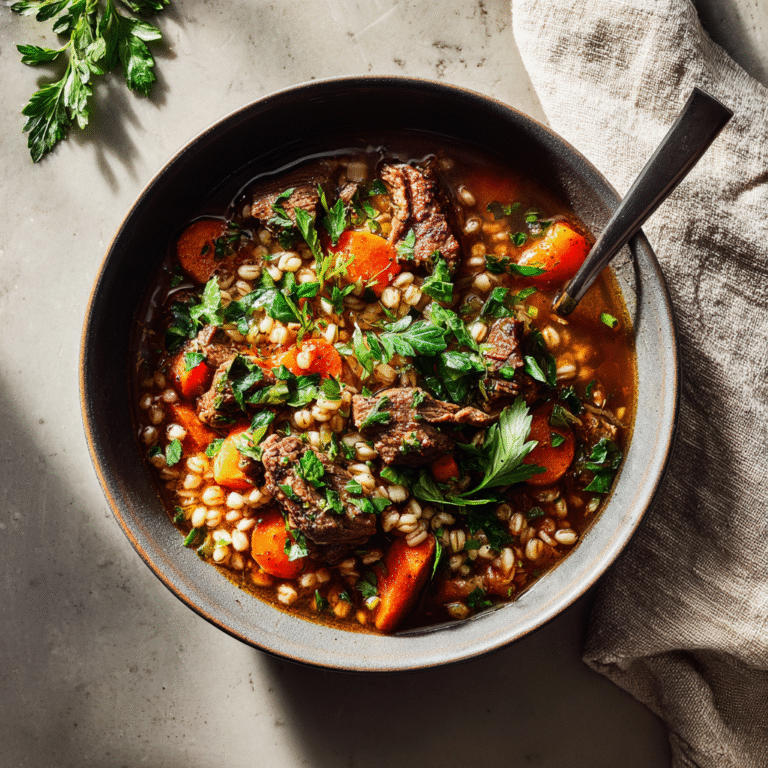
There’s nothing like coming home to the warm aroma of a simmering pot of comfort food. A beef and barley stew recipe has always been one of those timeless dishes that turns an ordinary evening into something memorable. Whether you call it a beef barley soup for a lighter version or a hearty barley stew when you want something rich and filling, this dish delivers every time. In this guide, we’ll walk through its history, the best ingredients to use, cooking tips, and serving ideas so you can create a pot that feels like home.
If you’re a fan of rich, slow-simmered flavors, you might also enjoy this Guinness Beef Stew Recipe
The Story Behind Beef and Barley Stew
A dish rooted in comfort
When people think of home-cooked meals that warm you from the inside out, a beef and barley stew recipe often comes to mind. This dish has a long history as a reliable comfort food, known for feeding families with wholesome ingredients and simple methods. Barley, with its nutty chew, has been a staple grain for centuries, and when paired with tender beef, it creates a balance that feels both rustic and nourishing. The roots of hearty barley stew are in the idea of making the most of everyday ingredients, turning them into a dish that’s greater than the sum of its parts.
From kitchens to cookbooks
Over time, cooks everywhere have adapted the classic beef and barley stew recipe to fit their own traditions. Some prefer a lighter broth-based style often called beef barley soup, while others lean toward a thick, slow-simmered version that’s rich and filling. Families have passed down their methods, adding touches like red wine, fresh herbs, or seasonal vegetables. What started as a way to make tough cuts of beef tender has grown into a dish beloved across cultures. Today, whether made in a Dutch oven, a slow cooker, or an Instant Pot, hearty barley stew continues to be a symbol of comfort and connection at the table.
Key Ingredients that Make It Special
Choosing the right beef

The heart of any great beef and barley stew recipe starts with the beef itself. Cuts like chuck roast, brisket, or short ribs bring both flavor and tenderness after long, slow cooking. These cuts are marbled with just enough fat to create richness without becoming greasy. If you’re preparing a lighter version, like beef barley soup, leaner cuts such as round steak can also work, though they may need extra simmering for tenderness. Choosing quality beef ensures that each spoonful is filled with hearty flavor, making your stew satisfying and memorable.
Types of barley and vegetables
Barley is the soul of this dish, and the type you choose makes a difference. Pearled barley cooks faster and has a softer texture, making it ideal for weeknight beef barley soup. Hulled barley, less processed, offers a chewier bite and adds earthy depth to a hearty barley stew. Alongside barley, vegetables bring balance and sweetness. Carrots, onions, and celery form the base, while potatoes, mushrooms, or parsnips can add seasonal variety. The combination of beef, barley, and vegetables turns a simple recipe into a meal that’s nourishing and layered with flavor.
Step-by-Step Cooking Guide
Building flavor from the pot up
The secret to a memorable beef and barley stew recipe lies in how you build flavor right from the start. Begin with a heavy-bottomed pot or Dutch oven. Pat your beef pieces dry, then season generously with salt and pepper. Browning the meat in small batches creates a caramelized crust that deepens the flavor, leaving behind those golden bits—fond—that will enrich the stew later.
After searing, remove the beef and add aromatics like onions, carrots, and celery, letting them soften and pick up the savory drippings. A splash of wine, broth, or even tomato paste deglazes the pan, scraping up all those flavorful bits. This step ensures your beef barley soup or hearty barley stew has a layered taste that’s far more complex than simply boiling everything together.
Timing for perfect texture
Once the base is built, it’s time to let the stew transform. Return the seared beef to the pot and add broth, seasonings, and barley. Here, patience is key. A slow, steady simmer allows the beef fibers to break down, becoming tender while the barley plumps up and releases starches that thicken the broth. Depending on the cut of beef, this can take anywhere from 60 minutes for leaner cuts to 2 hours or more for chuck or short ribs.
Stir occasionally to prevent sticking and check the seasoning midway through. For a lighter beef barley soup, keep the broth thinner and simmer just until the barley is tender. For a hearty barley stew, allow more reduction time so the broth thickens into a rich, almost gravy-like consistency. Either way, you’ll end up with a bowl that’s deeply satisfying and full of texture.
Print
Beef and Barley Stew Recipe
- Total Time: 2 hours 5 minutes
- Yield: 6 servings
Description
This Classic Beef and Barley Stew Recipe is a hearty, soul-warming dish filled with tender beef, wholesome barley, and a medley of vegetables. With its rich broth and comforting flavors, it’s the perfect choice for chilly nights, cozy family dinners, or make-ahead meal prep.
Ingredients
- 2 tablespoons olive oil
- 2 pounds beef chuck roast, cut into 1-inch cubes
- 1 large onion, diced
- 3 carrots, sliced
- 2 celery stalks, chopped
- 3 cloves garlic, minced
- 1 cup pearled barley (hulled barley for chewier texture)
- 8 cups beef broth
- 2 tablespoons tomato paste
- 2 teaspoons Worcestershire sauce
- 2 bay leaves
- 1 teaspoon dried thyme
- 1 teaspoon paprika
- Salt and pepper to taste
- Fresh parsley for garnish
Instructions
- Sear the Beef: Heat olive oil in a Dutch oven or large pot. Season beef cubes with salt and pepper, then brown in batches until golden. Remove and set aside.
- Sauté Vegetables: In the same pot, add onion, carrots, and celery. Cook for 5 minutes until softened, then stir in garlic and tomato paste for 1 minute.
- Deglaze and Build Base: Pour in a splash of broth to deglaze, scraping up browned bits. Add Worcestershire sauce, thyme, paprika, and bay leaves.
- Simmer the Stew: Return beef to the pot. Add the remaining broth and barley. Bring to a boil, then reduce heat and simmer covered for 1 ½ to 2 hours, stirring occasionally.
- Check for Doneness: When beef is fork-tender and barley is cooked through, adjust seasoning as needed. Remove bay leaves.
- Serve: Ladle into bowls, garnish with parsley, and serve with crusty bread or rolls.
Notes
For a lighter version, increase broth for a more soup-like texture. Add mushrooms for extra umami or root vegetables for more heartiness. Leftovers store well in the fridge for 3 days or freeze beautifully for up to 3 months.
- Prep Time: 20 minutes
- Cook Time: 1 hour 45 minutes
- Category: Stew
- Method: Stovetop
- Cuisine: American Comfort Food
Nutrition
- Serving Size: 1 serving (about 1 ½ cups)
- Calories: 390
- Sugar: 6g
- Sodium: 720mg
- Fat: 15g
- Saturated Fat: 5g
- Unsaturated Fat: 8g
- Trans Fat: 0g
- Carbohydrates: 38g
- Fiber: 7g
- Protein: 28g
- Cholesterol: 65mg
Cooking Methods and Variations
Stovetop, slow cooker, and Instant Pot

The beauty of a beef and barley stew recipe is that it adapts to whatever kitchen tools you have. The stovetop remains the most traditional method, allowing for steady simmering and control over thickness. Cooking low and slow gives the beef time to tenderize while the barley soaks up the broth, creating a dish that feels rustic and wholesome. For busy days, this recipe is a lifesaver. Simply sear the beef first, transfer everything into the crock, and let it cook on low for 7–8 hours.
The result is a deeply flavored hearty barley stew with minimal effort. The Instant Pot is another modern option, producing tender beef and perfectly cooked barley in under an hour. This method is perfect for weeknights when you crave the depth of beef barley soup without the long wait.
Seasonal and regional twists
Across kitchens worldwide, the beef and barley stew recipe has evolved into countless variations. In colder months, cooks often enrich the broth with red wine or dark ale, adding depth and warmth. In some European kitchens, you’ll find tomato paste or fresh tomatoes folded in, giving the dish a tangy brightness. Italian-inspired versions might use herbs like rosemary and thyme, while in American kitchens, garlic and Worcestershire sauce often make an appearance.
A rustic hearty barley stew might even include root vegetables like parsnips, rutabagas, or turnips to stretch the meal and boost nutrition. For lighter meals, the same foundation can be turned into a broth-forward beef barley soup, perfect for lunches or as a starter. Each variation carries the same comforting spirit, proving this stew’s timeless adaptability.
Smart Substitutions and Add-Ons
For dietary preferences
One of the reasons a beef and barley stew recipe has remained popular for so long is its flexibility. If you’re cooking for someone avoiding gluten, barley can be replaced with gluten-free grains like brown rice, quinoa, or even buckwheat. The texture will be slightly different, but the comforting heart of the dish remains. For those looking to cut back on red meat, leaner proteins such as turkey or chicken thighs can be used, resulting in a lighter take on beef barley soup without losing its rustic appeal.
Vegetarians can swap the beef for hearty mushrooms or lentils, paired with vegetable stock, to achieve the same depth of flavor. No matter your dietary needs, the stew can be adapted while still offering that cozy satisfaction of a meal shared around the table.
Flavor boosters
Once you’ve mastered the basics, the fun begins with layering in extras that elevate your stew. A spoonful of tomato paste adds richness, while a splash of balsamic vinegar or red wine deepens the broth. Mushrooms bring earthy umami notes, while fresh herbs like thyme, rosemary, and parsley brighten each bite. For a smoky edge, some cooks add a hint of paprika or even a dash of soy sauce for depth. These simple touches can transform a classic beef and barley stew recipe into something extraordinary.
If you prefer a lighter finish, squeeze in fresh lemon juice before serving to balance the richness of hearty barley stew. Each add-on allows you to shape the dish into something uniquely your own while keeping the comforting core intact.
Storage, Freezing, and Leftovers
Keeping stew fresh
One of the best things about making a big pot of beef and barley stew recipe is knowing tomorrow’s meal is already taken care of. After cooking, let the stew cool slightly before transferring it into airtight containers. Stored in the refrigerator, it will keep for about 3–4 days while maintaining its rich flavor and hearty texture. As the stew rests, the barley continues to absorb some of the broth, often making the next day’s serving even more satisfying.
If you’re reheating a thinner beef barley soup, you may want to add a splash of broth or water to loosen it back up. For thicker hearty barley stew, reheating gently on the stovetop helps maintain its deep, slow-cooked flavor.
Freezer-friendly portions
This dish is also perfect for freezing, which makes it a smart choice for meal prep. Divide your beef and barley stew recipe into single-serving or family-size containers and freeze for up to 3 months. For the best results, use freezer-safe bags or containers, leaving room at the top for expansion. When ready to enjoy, thaw overnight in the refrigerator and reheat slowly on the stove.
If you’re working with a brothier beef barley soup, freezing works beautifully since the grains don’t break down as quickly as pasta or rice. For a thicker hearty barley stew, freezing preserves the flavor but may slightly soften the barley. Stirring in a handful of fresh herbs when reheating revives the dish, making it taste just as fresh as the day it was cooked.
Serving Suggestions and Pairings
What to serve with stew

A steaming bowl of beef and barley stew recipe is satisfying on its own, but pairing it with the right side can turn it into a memorable meal. Warm, crusty bread is a natural choice, perfect for soaking up every last drop of broth. Cornbread adds a slightly sweet counterpoint, while a simple green salad provides a refreshing balance to the richness of the stew. For a homestyle dinner, many families enjoy serving beef barley soup with buttered rolls or biscuits. If you’re going for a rustic, hearty feel, roasted root vegetables on the side complement the deep flavors of hearty barley stew beautifully.
Making it a full meal
Beyond sides, you can elevate a beef and barley stew recipe into a centerpiece meal. Pair it with a bold red wine like cabernet or merlot, which complements the richness of the beef and the earthy notes of the barley. For a lighter touch, serve with sparkling water infused with lemon or herbs. To round out the evening, follow the stew with a comforting dessert such as apple crisp or bread pudding, both of which echo the rustic simplicity of the main course.
A lighter beef barley soup pairs well with fruit-based desserts, while a thick, hearty barley stew calls for something richer and indulgent. By considering sides, drinks, and dessert, you can transform a humble pot of stew into a full dining experience that feels timeless and deeply comforting.
FAQs
Can I make a beef and barley stew recipe ahead of time?
Yes, and it often tastes even better the next day. As the stew rests, the flavors deepen, and the barley absorbs more broth. Store it in the refrigerator for up to 3–4 days, then reheat gently on the stovetop.
What’s the difference between beef barley soup and stew?
The main difference is thickness. Beef barley soup has a lighter, broth-based consistency, while a hearty barley stew is thicker and richer, often simmered longer to create a gravy-like texture.
How can I thicken hearty barley stew without flour?
You don’t need flour to achieve a rich texture. Simmering uncovered allows the broth to reduce naturally, while the starch from the barley also helps thicken the stew. You can also mash a few of the cooked vegetables into the broth for added body.
Which barley type is best for a beef barley soup?
Pearled barley is the most common choice because it cooks faster and has a softer texture, making it ideal for beef barley soup. Hulled barley takes longer but adds a chewier bite, perfect for a more rustic hearty barley stew.
Conclusion
A beef and barley stew recipe is one of those timeless meals that never goes out of style. With tender beef, chewy grains of barley, and vegetables simmered to perfection, it delivers comfort in every spoonful. Whether you’re cooking for family or enjoying a quiet evening, this dish has the power to make even an ordinary night feel special.
The beauty of this classic is its versatility. A lighter beef barley soup works perfectly as a starter or cozy lunch, while a thicker, slow-cooked hearty barley stew makes a filling centerpiece for dinner. Each version adapts easily to your kitchen tools and personal preferences, proving that comfort food can be both practical and deeply satisfying.
More than just a recipe, this stew is a reminder of the joy that comes from simple ingredients and slow cooking. Shared around the table, it’s not only nourishing but also brings people together. When you need a meal that warms the body and soothes the spirit, a pot of beef and barley stew recipe is always the right answer.
Discover more culinary ideas and easy recipes on Facebook and Pinterest.