
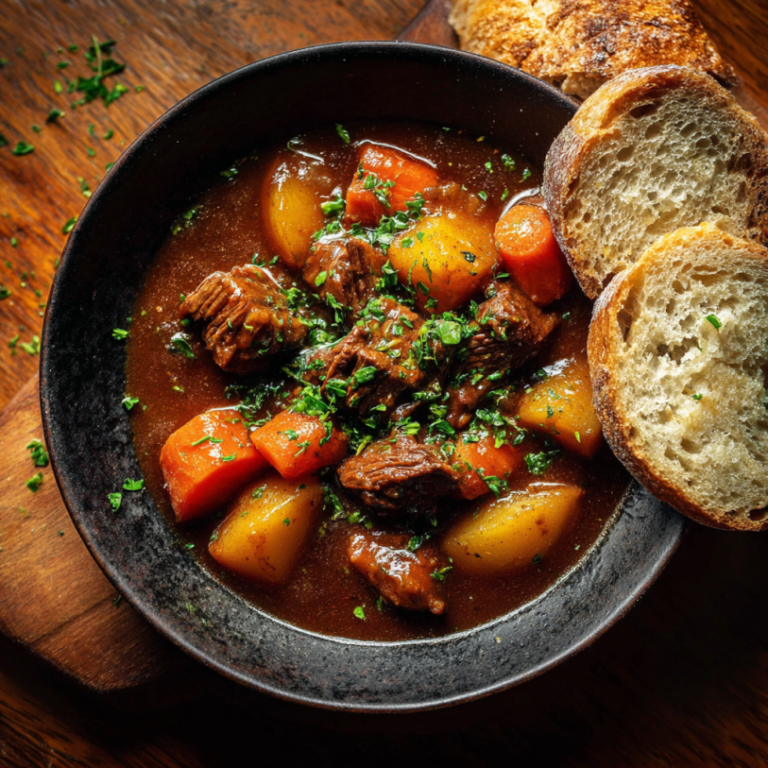
If you’re craving something warm, slow-simmered, and soul-hugging, this classic Irish beef stew recipe is where comfort begins. Made with tender chunks of beef, root vegetables, and a rich broth, it’s the kind of meal that brings everyone to the table. Whether you lean into the bold notes of a Guinness beef stew, or you just want a deeply hearty beef stew to serve on a cold evening, this recipe gives you all the options. From stovetop to slow cooker, I’ll walk you through every variation—so you get perfect results, every time.
A Taste of Home — The Soul of Irish Beef Stew
Why Irish Beef Stew Is More Than Just a Meal
Growing up in Savannah, Georgia, most people expect me to talk about shrimp and grits—but on chilly weekends, my grandma Miss Loretta pulled out her Dutch oven and made the most hearty beef stew you could imagine. She didn’t call it Irish stew, but everything about it—the beef, the slow simmer, the potatoes—carried that same rustic, cozy energy you find in a classic Irish beef stew recipe.
The secret wasn’t just in the ingredients. It was in how she layered them—seasoning with soul, searing the meat just right, and letting everything bubble until it turned into something magic. Years later, when I visited Ireland with my husband, I ordered a Guinness beef stew in a quiet little pub, and it was like tasting home all over again—only richer, darker, and with that unmistakable malty edge from the stout.
That moment changed how I make stew forever.
After enjoying a hearty bowl of Irish beef stew, why not indulge in something sweet for dessert? Check out these one-bowl desserts for a quick and easy treat
A Family Tradition Passed Down in Cast Iron
Back home in Charlotte, NC, I still use a heavy-bottomed Dutch oven and I still measure with my heart. This version is inspired by both Miss Loretta and that Irish pub—marrying the soulful warmth of a hearty beef stew with the depth and richness that Guinness brings. Whether you choose to make it the traditional way or turn it into a Guinness beef stew masterpiece, this recipe is your new go-to.
And trust me—once the scent fills your kitchen, you’ll know why this dish has lasted through generations.
Ingredients That Build Deep, Hearty Flavor
Choosing the Right Cut of Beef for Irish Stew
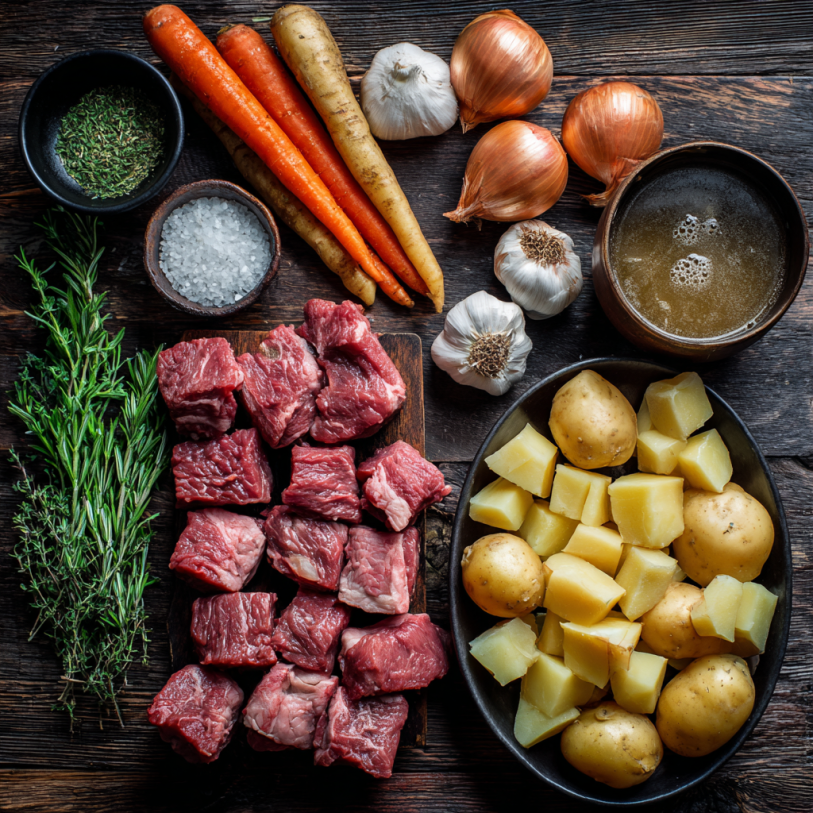
The base of any good classic Irish beef stew recipe is the meat—and choosing the right cut makes all the difference. You want a well-marbled cut that turns fork-tender after hours of gentle simmering. Beef chuck is my top pick. It’s affordable, rich in flavor, and develops that melt-in-your-mouth texture we all crave in a hearty beef stew.
If you’re feeling fancy or celebrating something special like St. Patrick’s Day, short ribs or even oxtail can add an extra layer of richness. But really, chuck is all you need—and a good sear is non-negotiable. That browning is where the stew’s deep flavor begins.
Make sure the pieces are about 1½ to 2 inches. Too small, and they’ll break down into mush. Too large, and they might not cook evenly.
Vegetables, Herbs, and Broth – What Makes It Authentic?
Authenticity in a classic Irish beef stew comes from simplicity. You won’t need anything too fancy—just a few humble, hearty vegetables and a good broth to tie everything together.
Start with:
- Yellow potatoes or baby reds: They hold their shape and soak up all the stew’s richness.
- Carrots: For sweetness and color.
- Parsnips (optional): Traditional in many Irish stews, adding an earthy tone.
- Onions & garlic: Always. Build your base.
- Celery: Not traditional, but I sneak it in sometimes for extra depth.
As for the broth—if you’re going classic, go with beef stock. But if you’re making a Guinness beef stew, that dark Irish stout becomes your flavor backbone. Just remember: use half Guinness, half beef broth to keep the balance just right.
Finish with thyme and a touch of Worcestershire sauce (not always Irish, but undeniably good). Salt and pepper to taste. That’s it.
This isn’t just any stew. It’s home in a bowl.
Print
Classic Irish Beef Stew Recipe
- Total Time: 2 hours 30 minutes
- Yield: 6 servings
Description
This Classic Irish Beef Stew is slow-simmered comfort food at its finest. Tender chunks of beef, hearty root vegetables, and a rich, savory broth come together in one pot for a meal that warms you from the inside out. Whether you’re cooking for St. Patrick’s Day or just need a soul-soothing dinner, this stew delivers traditional flavor with an optional Guinness twist.
Ingredients
- 2 tablespoons olive oil
- 2 pounds beef chuck, cut into 1½-inch cubes
- 1 large onion, chopped
- 3 cloves garlic, minced
- 3 carrots, peeled and sliced
- 2 parsnips, peeled and chopped (optional)
- 1 pound baby potatoes, halved
- 3 cups beef broth
- 1 cup Guinness stout (optional)
- 1 tablespoon tomato paste
- 1 tablespoon Worcestershire sauce
- 1 teaspoon salt (or to taste)
- ½ teaspoon black pepper
- 1 teaspoon dried thyme
- 1 bay leaf
- Chopped fresh parsley for garnish (optional)
Instructions
- Brown the Beef: Heat olive oil in a Dutch oven over medium-high heat. Sear beef in batches until browned on all sides. Remove and set aside.
- Sauté Vegetables: In the same pot, add onion and cook until softened, about 5 minutes. Stir in garlic, carrots, and parsnips. Cook for 3 more minutes.
- Build the Broth: Add tomato paste and stir to coat. Return beef to pot. Pour in beef broth and Guinness (if using), then add Worcestershire, potatoes, thyme, bay leaf, salt, and pepper.
- Simmer: Bring stew to a boil, reduce heat, cover, and simmer for 2 hours, or until beef is fork-tender.
- Thicken and Finish: Uncover the last 20 minutes to reduce slightly, or mash a few potatoes to naturally thicken. Remove bay leaf and adjust seasoning as needed.
- Serve: Ladle into bowls and garnish with fresh parsley. Serve hot with Irish soda bread or mashed potatoes.
Notes
For the best flavor, make the stew a day ahead and let it rest overnight in the fridge. To make it alcohol-free, simply substitute the Guinness with additional beef broth. Leftovers freeze well for up to 3 months.
- Prep Time: 15 minutes
- Cook Time: 2 hours 15 minutes
- Category: Main Dish
- Method: Stovetop
- Cuisine: Irish
Nutrition
- Serving Size: 1 bowl
- Calories: 480
- Sugar: 6g
- Sodium: 860mg
- Fat: 20g
- Saturated Fat: 7g
- Unsaturated Fat: 11g
- Trans Fat: 0g
- Carbohydrates: 35g
- Fiber: 4g
- Protein: 38g
- Cholesterol: 95mg
How to Make Classic Irish Beef Stew (Step-by-Step Guide)
Building Flavor from the Bottom of the Pot
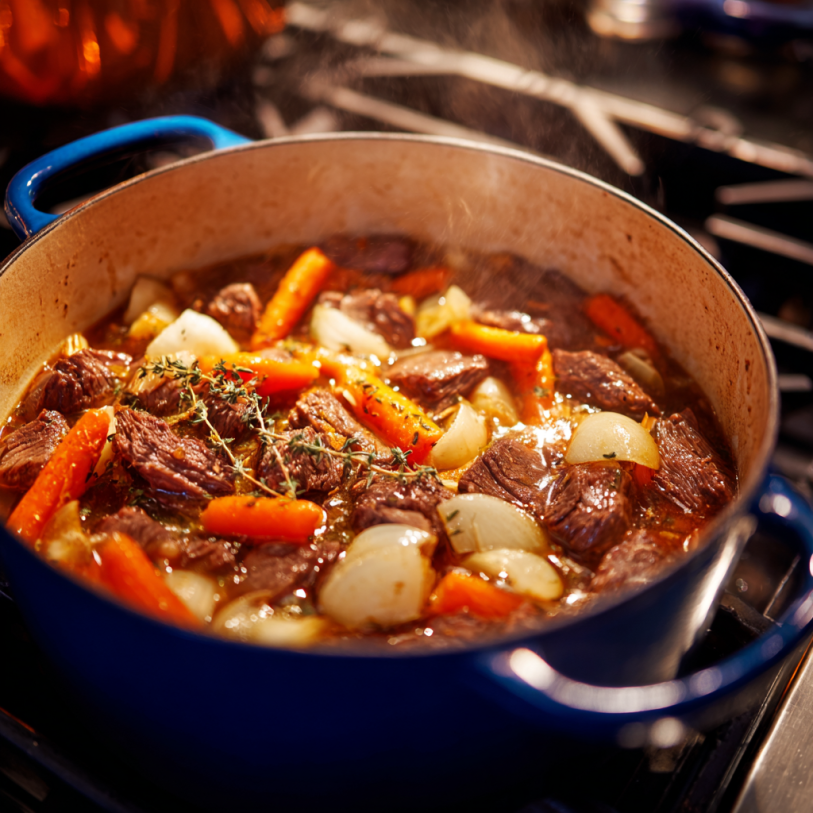
Every unforgettable classic Irish beef stew recipe starts with layering flavor from the ground up—literally. First, pat your beef dry with paper towels. This helps get that perfect sear. Season the beef well with salt and pepper, then warm a tablespoon of oil in a heavy Dutch oven over medium-high heat.
Add the beef in batches—don’t crowd the pan—and let each piece brown on all sides. This step goes beyond adding color—it builds the deep, savory foundation that makes a stew irresistible.
Once the meat’s seared, remove it to a plate. Add diced onions, carrots, and celery (if using) to the pot, scraping up those flavorful browned bits. Cook until softened, about 5–7 minutes. Stir in the garlic for half a minute, letting it release its aroma, before returning the beef.
Deglaze with a splash of broth or Guinness (if you’re making Guinness beef stew)—this lifts all that flavor right into the liquid. Stir in tomato paste and Worcestershire, then pour in the rest of your broth (or half Guinness, half broth). Add potatoes, bay leaf, thyme, and a pinch more salt.
Simmering to Tenderness — Timing & Texture Tips
Bring everything to a gentle boil, then reduce to low heat and cover. Simmer gently for 1½ to 2 hours, or until the beef is meltingly tender.
If the broth feels too thin near the end, uncover and let it reduce, or mash a few potato chunks right into the pot to naturally thicken it. Want even more depth? A splash of balsamic vinegar or a cube of dark chocolate can subtly elevate a Guinness beef stew without overpowering it.
Let it rest for 10 minutes before serving. That’s when the magic happens.
Guinness Beef Stew Variation – A Deep, Malty Twist
Why Cook with Guinness?
When it comes to comfort food, a Guinness beef stew hits differently. Guinness adds something no regular broth can—a deep, roasted complexity with hints of coffee, cocoa, and smoke. It’s bold but smooth, and when simmered low and slow with beef, it transforms the stew into something rich, dark, and unforgettable.
If you’ve only made a classic Irish beef stew recipe with stock, this variation will surprise you. The alcohol cooks off, but the layers of flavor stay, marrying beautifully with beef, onions, and herbs.
But here’s the trick: balance is everything. Too much Guinness and your stew can turn bitter or overpowering. I’ve tested this dozens of times, and the sweet spot is 1½ cups of Guinness + 1½ cups of beef broth. This ratio gives you the maltiness you want without overwhelming the dish.
Tips for a Balanced Bitterness
The key to a great Guinness beef stew is to soften those bitter edges with sweetness and umami. Start by caramelizing your onions a bit longer than usual. That natural sweetness balances the stout’s intensity.
Another tip? Add a tablespoon of tomato paste and a teaspoon of brown sugar while sautéing your aromatics. It’s subtle—but it rounds everything out beautifully.
Want to take it up a notch? A small knob of dark chocolate stirred in at the very end adds a silky, rich finish that enhances the stout’s roasted notes. It won’t make your stew taste like dessert—but it will make it taste expensive.
This version of a hearty beef stew is made for cold nights, big bowls, and thick slices of Irish soda bread to mop up every last drop.
Slow Cooker, Dutch Oven & Pressure Cooker Methods
Slow Cooker Irish Beef Stew: A Step-by-Step Guide
Busy day ahead? Place everything in the slow cooker and let the gentle heat do the work. But if you want to take your classic Irish beef stew from good to unforgettable, here’s the trick: sear the beef and sauté the aromatics before they go in.
It’s an extra step, but it builds flavor you just can’t get otherwise. Once that’s done, combine your beef, vegetables, broth, and Guinness (if using) into the crock. Set on LOW for 8 hours or HIGH for 4–5 hours.
Want a thicker hearty beef stew? About 30 minutes before serving, mash a few potatoes in the pot or whisk a tablespoon of flour with a few spoonfuls of hot broth, then stir it in.
Flavor tip: Finish with a splash of Worcestershire and fresh parsley before serving. It brightens the richness beautifully.
Quick Prep: Instant Pot or Dutch Oven?
If you need dinner now, go pressure cooker.
For deep flavor and a more traditional feel, use your Dutch oven.
Instant Pot:
Use the sauté function to brown the beef, then remove it and cook onions and garlic. Deglaze with Guinness or broth, scrape the pot, return beef and veggies. Pressure cook on High for 35 minutes, natural release for 10. Stir and reduce with “Sauté” if needed.
Dutch Oven:
This is my go-to for weekend cooking. Brown, build, and simmer all in one pot. Keep it low and slow: simmer covered for 2 hours, uncover for the last 30 to thicken.
Whichever route you choose, you’ll land in cozy stew heaven. That’s the beauty of this recipe—it fits your life, not the other way around.
What to Serve with Irish Beef Stew
Perfect Pairings – From Irish Soda Bread to Mashed Potatoes
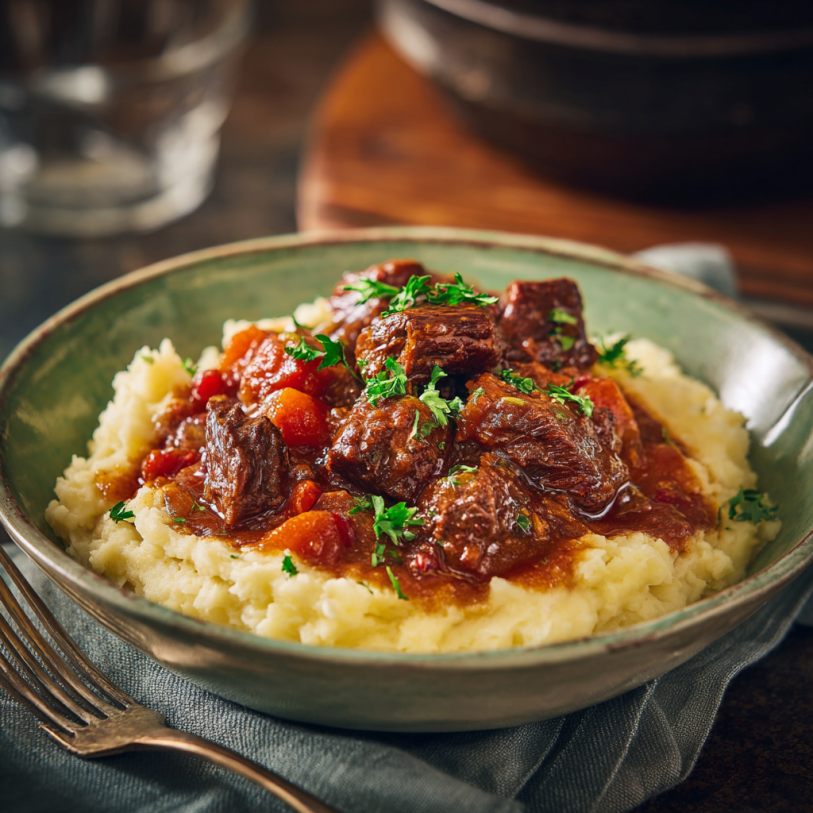
A classic Irish beef stew recipe is a meal on its own—but let’s be honest, it only gets better with something warm and buttery to mop up that rich, velvety broth.
Start with the obvious hero: Irish soda bread. It’s quick, crusty, and that soft center loves a hearty dip into Guinness beef stew. You can also try a simple skillet cornbread if you want a southern twist that nods to Miss Loretta’s kitchen.
Next up: mashed potatoes. Yep, even if there are already potatoes in your stew. Serving a scoop of creamy mash underneath your stew gives you that “meat and mash” pub-style feel. Bonus: it stretches your portions beautifully if you’re feeding a crowd.
For a vegetable side, go with buttery cabbage, roasted parsnips, or a side of Colcannon—a traditional Irish dish of mashed potatoes with kale or cabbage stirred in. It’s flavorful, filling, and absolutely stew-worthy.
Drinks & Side Dishes that Bring It All Together
Let’s talk drinks. If you’re serving Guinness beef stew, it’s only right to pair it with—you guessed it—a pint of Guinness. For something light, try a black tea with honey and lemon. It complements the savory depth of the hearty beef stew without competing with it.
Dessert? Keep it simple. Think shortbread cookies, apple crumble, or a slice of Irish cream cake.
Simple sides. Intentional flavors. Soulful comfort.
FAQs
Can I make Irish beef stew without alcohol?
Absolutely. If you want to skip the stout in a Guinness beef stew, simply replace it with extra beef broth or use a splash of balsamic vinegar or Worcestershire sauce for depth. The result will still be a flavorful, hearty beef stew, perfect for a family dinner or make-ahead meal.
How do I thicken Irish beef stew without flour?
The easiest way to thicken a classic Irish beef stew naturally is by mashing a few of the cooked potatoes directly into the broth. You can also let it simmer uncovered for the last 30 minutes to reduce the liquid. Another option is to stir in a slurry made with cornstarch and water if you prefer a gluten-free alternative.
Can I use pre-cooked beef or leftover roast in Irish beef stew?
You can, but with some adjustments. If you’re using leftover roast beef, add it toward the last 20 minutes of cooking so it doesn’t dry out. Pre-cooked meat won’t develop the same deep flavor as raw seared beef chuck, but it’s still a great shortcut for transforming leftovers into a cozy Guinness beef stew or weeknight-friendly hearty beef stew. Just be sure to boost the broth with extra herbs, tomato paste, or even a dash of soy sauce to deepen the flavor.
What vegetables work best in a hearty Irish beef stew?
For a truly hearty beef stew, go for root vegetables that hold their shape and absorb flavor without falling apart. Potatoes, carrots, and parsnips are the classic trio in any classic Irish beef stew recipe. Want to add extra depth? Toss in celery, turnips, or a handful of frozen peas near the end for a fresh pop of color. Avoid quick-cooking veggies like zucchini or spinach—they’ll go mushy in a long simmer. Stick to firm, earthy produce for a rich and satisfying bowl.
Conclusion
There’s something timeless about a pot of stew slowly bubbling on the stove. This classic Irish beef stew recipe isn’t just about filling your belly—it’s about feeding your spirit. Whether you stick to tradition or lean into the bold richness of a Guinness beef stew, each spoonful carries warmth, care, and a whole lot of flavor.
From family dinners to quiet nights in, this dish is just what you need—hearty, comforting, and endlessly customizable. Remember, great stew doesn’t demand perfection. It just asks for patience, good ingredients, and a little love.
So whether you’re ladling it over mashed potatoes, scooping it with crusty bread, or freezing a batch for a future hug-in-a-bowl moment, know this: you’ve got a recipe that feels like home.
Go ahead—make it once, then make it yours.
Discover more culinary ideas and easy recipes on Facebook and Pinterest.